
The Optical Market Is Consolidating. Here Is What UK Independents Should Take From It.
Two recent pieces from Curated Optics are worth reading — and worth reading critically.

They have been doing the rounds in optical circles over the past few weeks. If you have not come across them yet, the links are below. The first argues that Ace & Tate's acquisition of Spanish brand Project Lobster signals an existential threat to independents sitting in the middle of the market. The second makes the broader case that more than 60% of optical stores risk bankruptcy within 24 months — not because demand is falling, but because events have already overtaken the business models many practices are running.
Both are worth your time. Neither should be swallowed whole. Here is what UK independents should actually take from them.
First, a word on Ace & Tate
The Curated Optics piece frames the acquisition as evidence that the premium segment is being consolidated — and that independents must therefore move further upmarket into true luxury to survive. It is a reasonable structural argument. But calling Ace & Tate a premium brand is a stretch. Across the UK and Europe, Ace & Tate sits firmly in the mid-range. Well-designed, yes. Accessible prices, a good retail experience, and a strong brand identity. Not luxury. That is a different thing entirely, and the distinction matters.
Because the lesson the article draws — go luxury or go home — is only partially right. What Ace & Tate actually demonstrates is the power of knowing who you are and communicating it consistently. That is something any independent can build, at any price point. The real competition is not a brand taking your price bracket. It is a brand taking your price bracket while understanding its own identity better than you understand yours. That is the threat worth responding to.
A note on geography before we go further
The bankruptcy piece is not a UK-specific analysis. It is worth being clear about that. The article draws on examples from across Europe and North America — citing US and Canadian retail casualties alongside patterns observed in Southern Europe, Benelux, and the UK. The argument is global in scope. Which means it needs some translation before you apply it to a single-practice owner in Leeds, Swansea, or a market town in Derbyshire.
That said, the structural points it makes are real enough to take seriously wherever you are operating.
What the bankruptcy argument actually gets right
Most optical practices today depend heavily on patients aged 55 and older. That is a stable, loyal base. It is not a growth engine. The practices that will struggle are not the ones with older patients — they are the ones whose patient base is ageing with no plan in place to reach the generation coming up behind them. People who spend differently, choose differently, and find practices through entirely different channels. That is not a future problem. It is current, and it compounds quietly.
The piece also makes a sharp point about what it calls the conglomerate trap. Independent practices inadvertently finance their own decline by stocking brands available at the nearest multiple brands owned by large groups that simultaneously sell through their own retail channels and have no interest in helping independents differentiate. If the high street could replicate your frame wall, that is worth sitting with for a moment.
The third thread — about virtual try-on technology and smart glasses accelerating the irrelevance of purely functional retail — is directionally correct, if slightly breathless in its urgency. The point stands. Physical retail increasingly needs to justify itself through experience and relationship, not just access to product. UK independents who have already built that — whose patients genuinely would not go anywhere else — are further ahead than they might realise.
What to actually do about it
The Curated Optics conclusion leans heavily toward luxury as the answer. For a solo independent running a single practice, that framing can feel remote. It helps to translate it into something more usable.
The real takeaway is simpler than going luxury. It is this: know what makes your practice different, and make sure your patients know it too. That might mean a frame wall carrying brands nobody else within twenty miles stocks. It might mean clinical services — dry eye, myopia management, advanced imaging — that turn your practice into a destination rather than a convenience. It might just be the relationship your team has with patients who have been coming to you for fifteen years and would not dream of going anywhere else. That relationship is nothing. It is the thing chains cannot buy.
None of this requires repositioning as a luxury destination. It requires clarity about what you already offer — and the confidence to build on it deliberately rather than waiting to see what the market does next.
The consolidation these articles describe is real. The chains are getting bigger. Players with better branding and deeper pockets are squeezing the mid-market. Practices without a clear identity will find it harder to compete. But the independent practices that understand their own value are not the ones who should be losing sleep over any of this. They are, quietly, exactly what the market is moving toward.
If you want to talk through what differentiation looks like for your specific practice, that conversation starts here. Book a Free 20-Minute Independence Call
Related Posts
-

The GOC is investigating ghost clinics. Here's why that's good news.
The General Optical Council is officially investigating the commercial practices that independent practice owners hav...
-

The Glasses That Focus Themselves: Meet IXI Eyewear
Think about the last time someone genuinely reinvented glasses. Not the frames — frames come and go with fashion — bu...
-
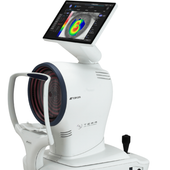
TERA: Dry Eye Imaging for Independent Practice
Dry eye is no longer a side note in independent practice. It is one of the fastest-growing clinical demands in UK opt...


1 comment
Definitely the way forward is differentiation. Unique or own brands, dry eye, myopia control, visual stress colorimetry, leaning into luxury if your demograph suits but importantly making the dispensing shopping experience unique.
I honestly think independents are going to flourish and the “big losers” are going to be the multiples selling blandness or everday brands. Let the takedown begin!