
The Numbers Still Look Fine. That Is Exactly the Problem.
The Numbers Still Look Fine. That Is Exactly the Problem.
Pull up the spreadsheet for most eyewear businesses right now and you will see something reassuring. Revenue holding. Topline stable. Nothing that suggests alarm.

But look a little harder and the picture shifts. Unit volumes are down. Average selling prices are up. The numbers are not lying exactly — they are just not telling the whole truth. Price inflation is doing the work that sales volume used to do, and that equation has a ceiling.
The global luxury eyewear market is in a slowdown. Not a collapse. Not a crisis — yet. But across independent boutiques and wholesale channels alike, sell-through has dropped sharply. Estimates put the decline at somewhere between 25 and 30 percent in luxury independent eyewear over the past quarter. Launch calendars are being pushed back. Full collection debuts have given way to safer moves: new colourways on existing shapes, updated acetates, marginal material changes that look like innovation without the risk of it.
Nobody is saying it loudly. But everybody in the trade knows it.
Why This Is Happening
Part of it is consumer confidence. When people feel uncertain about money — whether that is mortgage rates, energy bills or job security — discretionary spending tightens. Eyewear, particularly at premium price points, is discretionary. It always has been.
But the deeper issue is not purely economic. It is structural. And it has been building for years.
Luxury frame prices have risen dramatically over the past decade. A frame that might have retailed at around £280 ten years ago now sits comfortably above £700 in the same category. Some segments push well beyond that. Inflation accounts for some of it. Genuine craft and material development accounts for some more. But a significant portion? That is margin extraction dressed up as positioning.
Patients are not stupid. They can feel the difference between a price increase that reflects something real and one that does not. And increasingly, they are asking questions at the dispensing table that independent practices need to be ready to answer.
The Distribution Problem Nobody Wants to Admit
Walk into five independent practices in any UK city and look at the frame walls. Then walk into five more. The overlap will be uncomfortable.
Over-distribution has quietly become one of the most damaging forces in independent eyewear. When a brand is available everywhere, it stops being special anywhere. The independent practice loses its point of difference. The patient loses their reason to seek you out specifically. And the brand loses the very thing that made it worth stocking in the first place.
The fix is not complicated, but it requires courage from both sides. Brands need to become more selective about who they supply and where. Independent practices need to stop defaulting to the same familiar names that the practice down the road already stocks. Exclusivity is not a luxury in the current market. It is survival.
There is also a margin argument here worth making clearly. The layer of agents and distributors sitting between brands and practices absorbs a significant slice of the value chain — estimates suggest as much as 25 to 30 percent in some cases. Direct brand relationships, where they are possible, mean that margin stays where it belongs: in the business of the practice that is actually doing the work of selling.
The UK Independent Is Not Immune
It would be comfortable to read all of this as a global problem with limited relevance to a well-run UK independent. It is not.
The same pressures are present here. Consumer caution is real. Frame walls in too many independent practices have become predictable. Business models that worked in 2005 are being operated in 2026 with only cosmetic changes. And the practices that are struggling most are the ones that never made the leap from being a shop that sells glasses to being a destination that people actively choose.
That distinction matters more now than it has at any point in the past decade. When spending slows, patients become more deliberate about where they go. They do not drift into the nearest optical. They go somewhere specific, for a specific reason. The practices with a clear identity, a curated frame offer, and a dispensing conversation that justifies the price point are holding their ground. The ones relying on footfall and familiarity are feeling it.
What the Shift Toward Quieter Luxury Means for Your Frame Wall
There is a broader aesthetic movement worth paying attention to, because it is already influencing what patients are coming in looking for.
The appetite for loud, logo-heavy, statement eyewear is softening. In its place, something more considered is gaining ground — understated shapes, refined materials, frames that reward closer inspection rather than demanding immediate attention. Call it quiet luxury if you like the term. The practical reality is that patients with disposable income are increasingly drawn to things that feel considered rather than conspicuous.
For independent practices, that is good news. The frame brands that sit in this territory — makers with genuine craft credentials, clear design philosophy, and a story that holds up to scrutiny — are exactly the kind of brands that independent practices are positioned to stock and sell better than anyone else. Corporate chains do not have the dispensing conversation for that. You do.
The Opportunity Inside the Slowdown
A contracting market sorts practices into two groups: those that retreat and those that use the pressure to sharpen what they do.
This is the time to look critically at your frame wall. What is earning its space? What is there because it has always been there? Which brands genuinely give you something to talk about at the dispensing table, and which ones are available in four other practices within two miles?
It is also the time to think seriously about how you are framing value to patients. Not discounting. Not apologising for price. But building the dispensing conversation that explains — clearly, confidently, without jargon — why the frame in their hands is worth what it costs. That conversation is the independent's greatest asset. In a market where price inflation has outrun perceived value, the practices that can close that gap will keep their patients. The ones that can't will lose them to online.
The slowdown is real. So is the opportunity inside it.
If you want to think through how your practice is positioned to navigate what is coming, Grow Independent is the place to start.
Related Posts
-

BMAO Condemns Golders Green Terror Attack and Walsall Rape in Official Statement
From BMAO: "Silence in the face of violence is not neutrality. It is complicity. What happened in Golders Green and t...
-

L.G.R: The Eyewear Brand Born From a Warehouse in Eritrea
In 1936, an Italian photographer arrived in Asmara, Eritrea, sent by the Instituto Luce to document the war. He never...
-
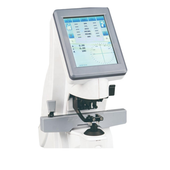
The OICO LM-300: The Lensmeter That Earns Its Keep in Independent Practice
The Lensmeter That Does More Than Verify Every independent practice has a lensmeter. Most of them are doing one jo...


