
TERA: Dry Eye Imaging for Independent Practice
Dry eye is no longer a side note in independent practice. It is one of the fastest-growing clinical demands in UK optometry, and the independent practices that invest in proper diagnostic infrastructure now will own that conversation for years. The Topcon TERA is designed for exactly that moment.

The TERA is a dry eye imager and corneal topographer. Not a screening tool. Not a gimmick. A clinical instrument that combines Placido-based anterior corneal mapping with a full dry eye assessment suite in a single device — built around the TFOS DEWS III framework, which is the current international standard for dry eye disease evaluation and management.
This is equipment designed for the optometrist or dispensing optician who wants to run dry eye clinics with clinical rigour. Here is what it does and why it matters.
What the TERA actually measures
The dry eye suite covers the clinically relevant assessments. Non-invasive tear break-up time (NIBUT). Tear meniscus height (TMH). Blink analysis. Lipid layer assessment using a patented approach under diffuse illumination, graded against the internationally recognised Guillon scale. Meibography. Lissamine Green imaging. Fluorescein imaging and video, which also supports rigid contact lens fitting documentation.
For redness grading, the TERA uses the Efron and Jenvis scales. Blepharitis imaging is graded on the Efron scale. Fluorescein staining is assessed using the Jenvis grading scale. These are not proprietary grading systems invented by the manufacturer. They are the scales your peers are using, the scales the literature references, the scales that hold up in clinical documentation.
The corneal topography side includes keratoconus detection and Zernike aberration analysis—a full anterior corneal mapping capability alongside the dry eye suite, in one instrument.
Integrated questionnaires and structured reporting
The TERA includes integrated OSDI-6 and DEQ-5 questionnaires — both recommended by TFOS DEWS III — to capture patient-reported outcomes alongside clinical measurements. That combination matters. Dry eye management is longitudinal. Patients return. Data needs to be comparable across visits. Structured reports are generated directly on the device or via TERA Review Software on any connected PC.
Standardised grading. Reproducible outcomes. Clear documentation over time. These are the building blocks of a dry eye clinic that patients trust and refer from.
Automation without compromising precision
The TERA uses one-touch auto-alignment, autofocus, and auto-capture. High-resolution, reflection-free imaging is delivered through advanced optics and a motorised diaphragm. The practical implication is consistent image quality across operators and appointments — important when you are tracking clinical change over months or years, and when you are building a team rather than operating solo.
What this means for an independent practice
Dry eye is underdiagnosed and undermanaged. The ophthalmology waiting list in England currently sits at approximately 608,000 patients. Optometry is being asked — by commissioners, by patients, and by the profession itself — to take on a greater share of the burden of anterior eye disease. Independent practices that build capability now are ahead of that shift, not scrambling to catch up.
A corporate multiple runs dry eye as a throughput exercise. An independent practice can run it as a specialist clinic. Named practitioners. Proper follow-up. Continuity of care across the full management pathway. The TERA supports that model: its structured reporting and longitudinal data tools are designed for practices running proper dry eye programmes, not triage appointments.
Stocking a device like this also changes the conversation at the frame wall and in the consulting room. Patients who have had a thorough dry eye assessment — with imaging, grading, questionnaires, and a clear management plan — understand what they are getting from an independent that they cannot get elsewhere. That is a differentiation argument that sells itself.
The fluorescein and rigid contact lens-fitting capabilities are worth noting separately. For practices building or expanding a speciality contact lens service, having that documentation functionality integrated removes the need for a separate instrument.
The investment question
Topcon has not listed pricing on the UK product page. Contact your Topcon Healthcare representative directly for UK pricing and to arrange a demonstration. A brochure is available for download at topconhealthcare.eu.
The question worth asking before the conversation is: What is the revenue model for a dry eye clinic in your practice? Dry eye management generates recall appointments, treatment compliance follow-ups, and associated lens and supplement sales. For a practice with the patient volume to support it, the arithmetic of dry eye as a clinical service is straightforward. The TERA is the infrastructure that makes that service credible.
Building a dry eye clinic or considering your next equipment investment? That is exactly the kind of decision our Grow Independent service is built around. Book a Free 20-Minute Practice Growth Call
Related Posts
-

The goodwill the NHS eye care system runs on — and who pays for it
Goodwill is not a funding model. But right now, it is holding the NHS eye care system together — and the OFNC wants t...
-
What Mintel's 2026 UK Optical Retailing Report Means for Independent Practices
Mintel's latest UK Optical Goods Retailing report — published March 2026 — contains data that every independent pract...
-
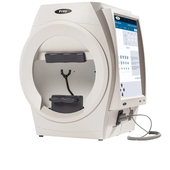
Frey AP-600 Lite Automated Perimeter — Full Product Specification
The AP-600 Lite is a compact, fully featured automated visual field analyser designed for small and medium practices ...


